
Winning Before Letting: What a Coal Chute Taught Me About Managing Project Risk

by Justin Wiatrek
One of the best lessons I’ve learned came from a coal chute ten feet above my head.
I recall walking down a concrete lined channel in an alley between historic buildings when I noticed a coal chute in a brick wall. My initial thought was, “this seems out of place”. A few minutes later I realized the historic building I was standing by had a basement touching the bridge I was about to replace with the proposed project.
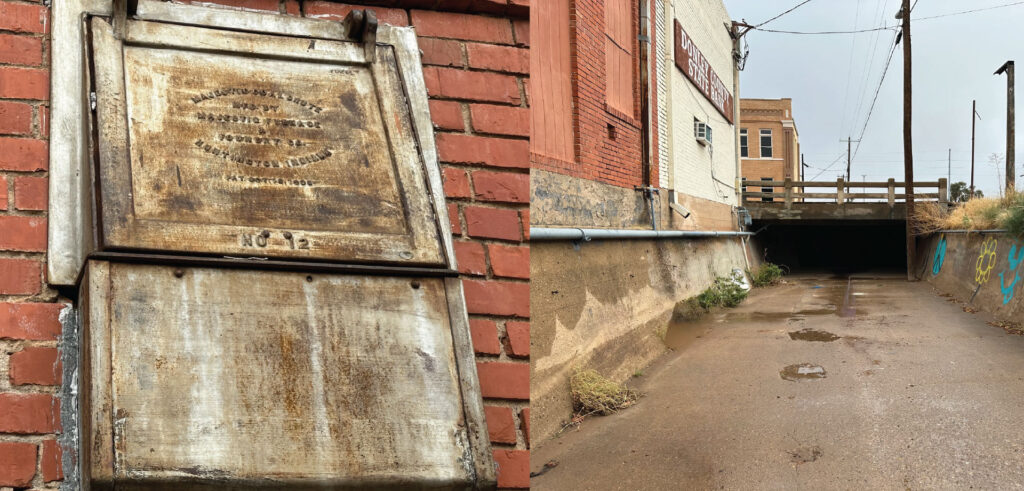
Developing a constraints and risk management plan during project initiation helps the team move from reacting to problems to proactively managing them. Rather than waiting for challenges to surface during construction, engineers can identify potential obstacles, evaluate their impacts, and develop strategies to reduce their likelihood or severity. By performing the site visit and discovering the historic building’s basement, we were able to proactively plan for utilizing a drill shaft retaining wall to shore up the building foundation in the design phase, avoiding a major issue that would have been encountered during construction.
A risk management plan should not be a document that sits on a shelf. It should be a living tool that evolves throughout project development, helping guide decisions as new information becomes available.
Understanding Project Risks Early
Every transportation project faces uncertainty. Utility conflicts, material availability, funding limitations, environmental constraints, right-of-way acquisition, and stakeholder concerns all have the potential to impact cost, schedule, and quality. The earlier these risks are identified, the more options a project team has to mitigate them.
Don’t ever discount the value a site visit brings at the beginning of a project before the design process even starts. Every project site has a story to tell if we are willing to pay attention to the clues left behind.
Lesson learned: Some of the most significant project risks aren’t found in plans or reports. They’re discovered in the field. Early site visits provide valuable context that can uncover hidden constraints, reduce uncertainty, and help project teams make better decisions before design begins.
The Importance of Communication
Even the best risk management plan is only effective when communication is maintained among all project stakeholders.
Transportation projects often involve a diverse team that includes local governments, utility owners, funding agencies, regulatory agencies, consultants, and the public. Each stakeholder possesses information that could significantly influence project success.
Frequent coordination meetings and open communication channels allow risks to be identified before they become major issues. Often, the most valuable information comes from stakeholders closest to the affected infrastructure or community.
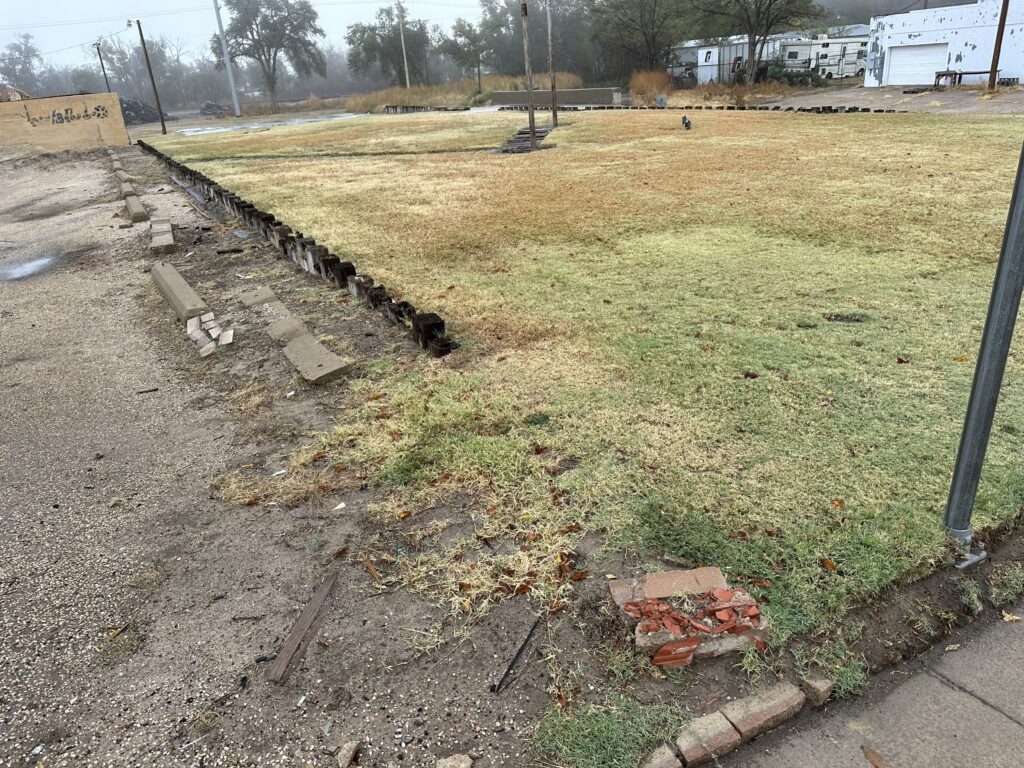
During the site visit where I discovered the basement of the adjacent historical building, I took time to visit with the City’s maintenance staff and businesses located next to the proposed bridge replacement. These conversations led to an early understanding that our project would conflict with the City’s shallow sanitary sewer line and revealed that a bank owned part of the existing culvert beyond the State right-of-way.
Lesson learned: In many cases, successful risk management is simply the result of ensuring the right conversations occur at the right time.
Innovation to Mitigate Risks
The COVID-19 pandemic provided a powerful reminder of the importance of risk management, adaptability, and innovation in project excellence. While many project risks can be anticipated through experience and planning, unprecedented events often require engineers to think beyond traditional solutions.
During the pandemic, global supply chain disruptions created shortages of critical construction materials. On a sidewalk improvement project, I encountered a significant utility coordination challenge involving the relocation of an overhead fiber-optic line. During the early stages of utility coordination, the utility owner informed us that a relocation that would have typically required approximately five months to complete prior to the pandemic now had a 24-month lead time due to material shortages. With the project scheduled to let in only nine months, it became clear that this utility conflict had the potential to become a major obstacle to project success.
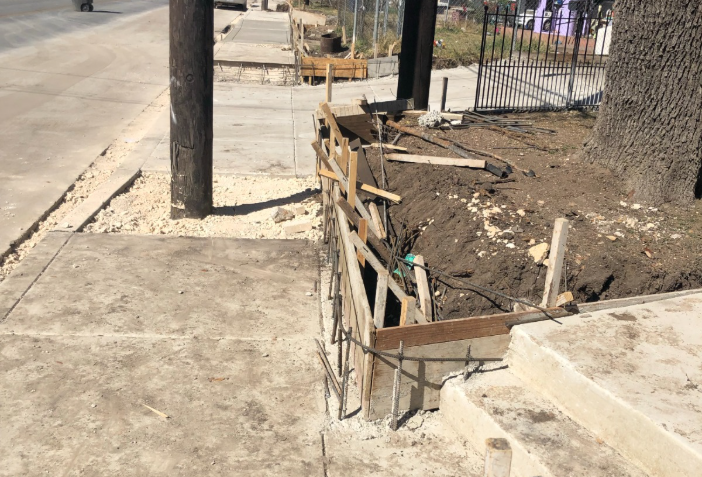
Through continued coordination with the utility owner, we explored every available option to accelerate the relocation. However, during this unprecedented period, traditional solutions such as material substitutions or alternate suppliers were not viable. Recognizing that the utility relocation was largely outside of the project’s control, our team shifted its focus toward identifying solutions that were within our control.
This challenge required the project team to rethink traditional approaches to utility coordination. Rather than allowing the unresolved utility conflict to delay the entire project, we developed a temporary 5-foot by 5-foot asphalt sidewalk detail around utility poles that could not be relocated before construction. By incorporating this detail into the plans during the design phase, the contractor was provided with a clear path to construct the proposed sidewalk while safely working around the existing infrastructure.
Equally important was maintaining open communication with both the utility owner and the City throughout the process. By proactively identifying the risk, coordinating regularly with stakeholders, and providing practical construction tools within the plans, we transformed what could have been a significant project delay into a manageable construction condition.
As a result, the contractor was able to proceed without interruption; the project was delivered to the City on schedule, and no contractor delay claims were incurred. The experience reinforced a valuable lesson: effective risk management is not always about eliminating risks.
Lesson learned: Often, it is about recognizing constraints early, collaborating with stakeholders, and developing innovative solutions that keep projects moving forward despite unforeseen challenges.
Understanding Funding Constraints
Another commonly overlooked risk involves funding timing.
Many roadway projects require coordination with local governments that own and maintain utilities affected by the proposed improvements. While relocation plans may be technically feasible, they are not always financially feasible within the project’s desired schedule.
A $250,000 utility relocation may appear minor within a $38 million transportation project, but for a small community, that relocation can represent a significant budget challenge. When this sewer line belongs to a city with a population of 1,425 people, the city may fully support the project and understand the relocation needs, but funding for that work may not be available until the next fiscal year’s budget cycle. If the project team does not identify this constraint early, utility relocations can be delayed, creating schedule impacts that ripple throughout project delivery.
Understanding a stakeholder’s funding can be just as important as understanding the engineering challenges associated with the utility relocation itself. Early discussions with city staff and decision makers can help align project schedules with funding availability and reduce the likelihood of unexpected delays.
Lesson learned: A project’s greatest challenge is not always technical. Successful project delivery requires understanding the financial realities of every stakeholder involved. Early conversations about funding, budgeting, and timing can prevent avoidable delays and keep projects moving forward.
Why Risk Management Matters More Today Than Ever
Transportation projects continue to grow in complexity as adjacent land development and evolving community needs drive clients to maximize infrastructure improvements within constrained rights of way. A common challenge is coordinating with stakeholders to reserve sufficient space for proposed transportation facilities while navigating increasingly congested utility corridors. At the same time, public agencies face mounting pressure to deliver more improvements with limited funding and resources. In this environment, proactive risk management is no longer simply a best practice; it is essential to successful project delivery. By identifying potential challenges early, project teams can anticipate issues, implement mitigation strategies, and maintain greater control over project outcomes rather than reacting to unforeseen setbacks.
Where Project Success Begins
One of the most rewarding milestones in my career as a Transportation Design Engineer is seeing a project that has been years in the making finally reach its letting date. This moment represents more than the completion of design. It symbolizes the transition from planning and engineering to construction, where the vision developed through countless meetings, design iterations, utility coordination efforts, and quality reviews is placed in the hands of the contractor team.
Reaching letting is far more than an administrative checkpoint. It reflects years of identifying risks, resolving constraints, and making informed decisions to position the project for successful construction. By the time bids are opened, many of the factors that will ultimately influence project performance have already been addressed through thoughtful planning, stakeholder engagement, utility coordination, and proactive problem-solving. The projects that perform best during construction are often those where the project team invested the time and effort early to understand site conditions, engage key stakeholders, and anticipate challenges before they could affect scope, schedule, or budget.
While project success is often measured by construction outcomes, the foundation for successful delivery is established long before the first shovel enters the ground. During planning and design, project teams have the greatest opportunity to identify and manage risks, address critical constraints, and influence project outcomes. Effective risk management during these early phases not only reduces uncertainty but also improves constructability, enhances stakeholder confidence, and increases the likelihood of delivering a successful transportation improvement.